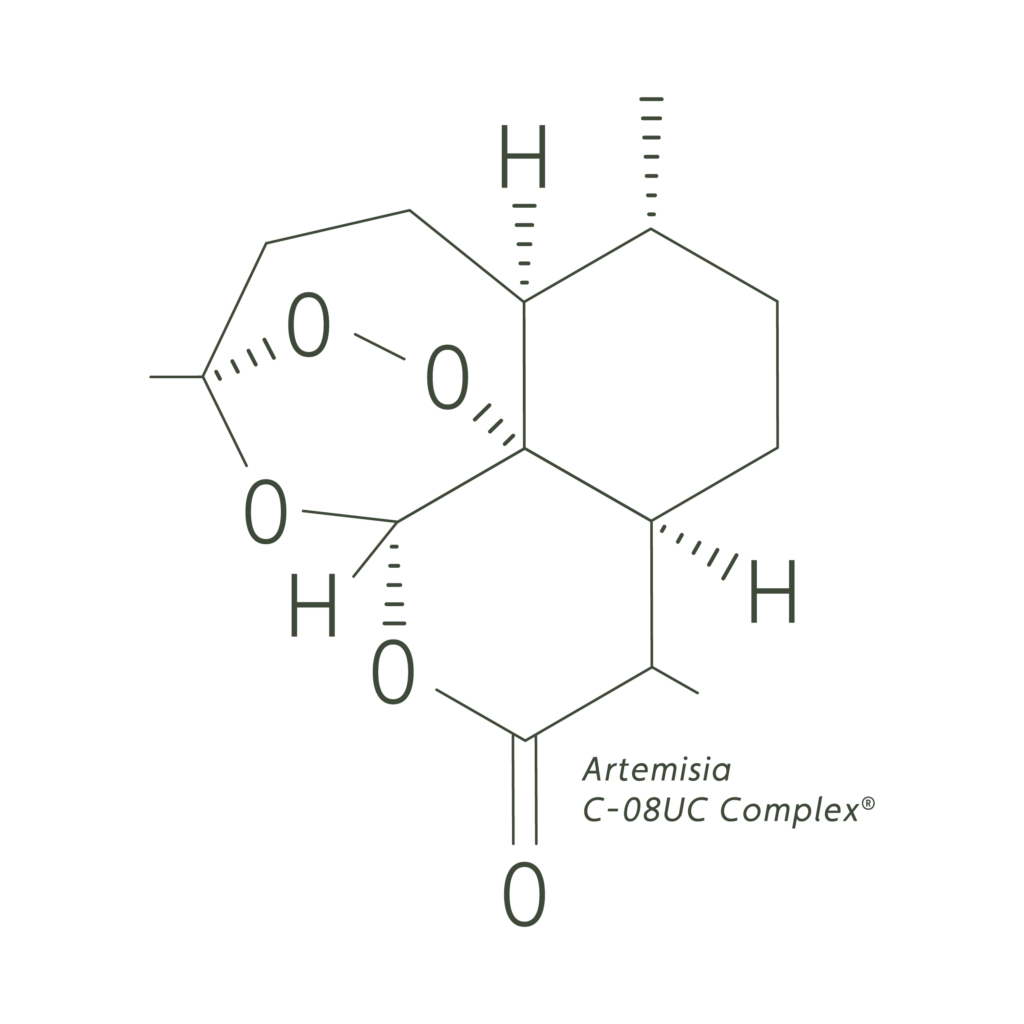
Derived from Artemisia annua – the same botanical whose active ingredient contributed to a Nobel Prize in Medicine for antimalarial therapy – this plant holds one of the most respected scientific legacies in modern natural research. Over time, specialized Artemisia annua cultivars have been optimized to concentrate key bioactive components – some revealing extraordinary potential for skin health.
The Artemisia C-08UC Complex® has been specially developed for cosmetic applications. It protects the skin thanks to its antiseptic, antibacterial and antioxidant properties and counteracts any damage that has already occurred.
Partnering with leading research specialists in Switzerland, 72k refined cultivation, growth conditions and high-precision extraction – resulting in our exclusive Artemisia C-08UC Complex® – developed to maximize the skin-supporting potential of this remarkable botanical.
Our innovative, multi-active Artemisia C-08UC Complex® with anti-pollution shield combats the signs of skin ageing: ‘Aging well at its best’, based on 20 years of phyto- and skin biology research, entirely developed and produced in Switzerland.
The high quality of the 72k own Artemisia annua plants is influenced by the unique growing conditions in the Swiss Alps and our special dual-phase phytoextraction process of 72k. Our dual-phase phytoextraction system uses a precisely calibrated combination of natural protic and polar components to isolate defined spectra of bioactive compounds from plant raw materials with high selectivity (flavonoids, phenolic acids, sesquiterpene lactones such as artemisinin, bitter compounds, tannins).
72k’s UltraDeepDelivery® brings state-of-the-art transdermal delivery technology from the pharmaceutical industry into use.
The active ingredients are embedded in highly flexible, ultra-fine ethosomes that temporarily optimize the lipid structure of the stratum corneum layers. This allows functional actives to efficiently diffuse along the natural intercellular channels into deeper layers of the epidermis – while maintaining the skin’s natural barrier function.
At the site of action, the ethosomes dissolve and release their amphiphilic components with small molecular size. This enhances the distribution and penetration of the functional active ingredients within the epidermis.
Artemisinin, the active ingredient in Artemisia annua, combats excessive skin pigmentation. These research findings were published in 2018 in an article in the prestigious British Journal of Dermatology (Oxford). The article highlights the particular dermatological benefits of artemisinin.
It addresses a wide range of skin concerns. Specifically developed to combat pigmentation. Also effective against acne-like skin conditions and hyperpigmentation. A first aid must-have in every household.
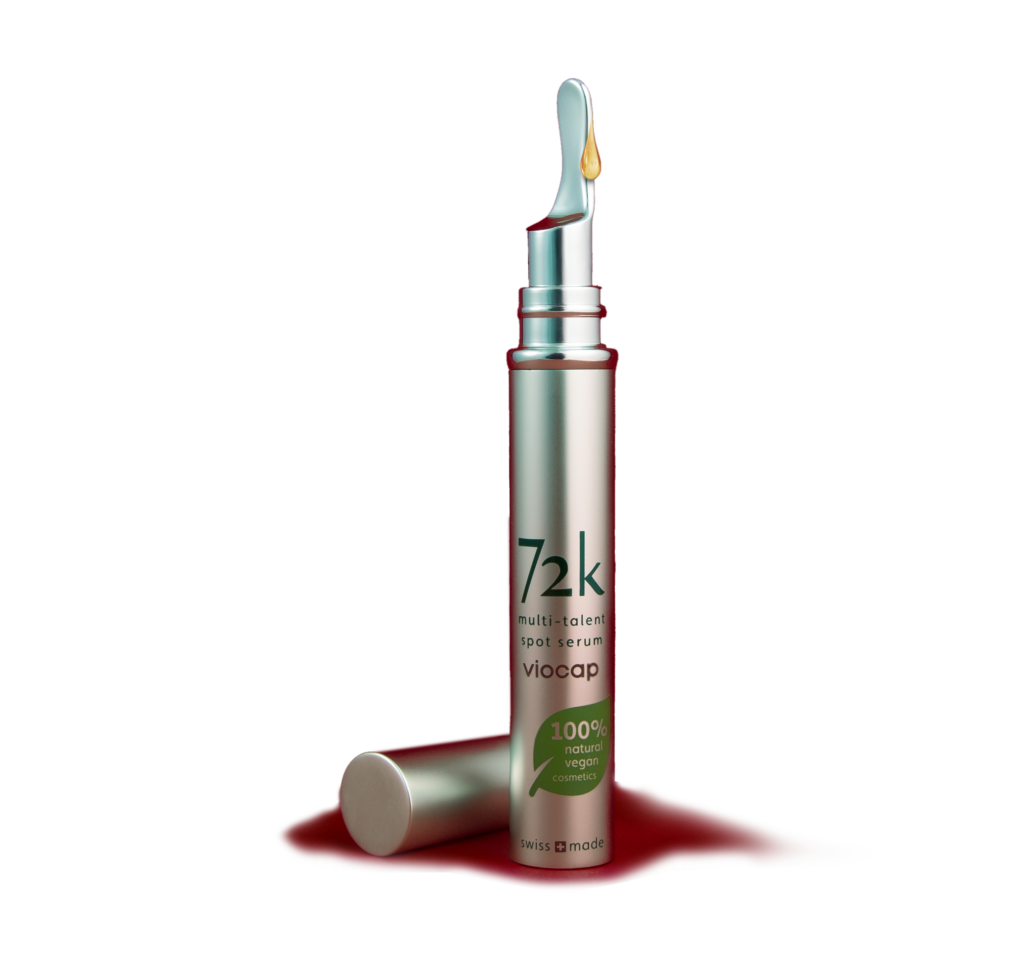
Enhances the skin’s regeneration process, leading to a smoother and firmer appearance.
Treats a wide range of skin issues, such as blemishes, enlarged pores, blackheads, and acne. Regulates the overproduction of melanin (the brown skin pigment). Diminishes rosacea-induced skin redness by strengthening blood vessels. Reduces hyperpigmentation, post-inflammatory spots, and scars.
The antioxidant properties combat premature skin aging resulting from UV radiation and environmental pollutants, thereby protecting the skin and maintaining its health and appearance. Its antiseptic and antibacterial properties act as a protective barrier for the skin, mitigating any inflammation that might arise.
Antioxidant properties combat premature skin ageing caused by free radicals. The complex reduces inflammation and supports the aging-well process.
Natural cell structure is stimulated and acts as a ‘bio-filler’ – for smoother, firmer skin.
➤ Tannins inhibit elastin degradation and have an astringent (contracting) effect.
➤ Bitter substances promote keratinocyte synthesis (keratinocyte synthesis is the formation of keratin, the main protein in the skin, which is produced in keratinocytes, the main cells of the epidermis), i.e. the cell formation process in the skin.
Skin renewal, wound healing and regeneration of the barrier function are promoted.
Reduces hyperpigmentation and post-inflammatory spots: regulates melanin production and thus the formation of spots, and reduces existing spots (lightening effect).
Combats vascular redness such as rosacea or couperose by strengthening the blood vessels.
With 72,000 µg TE / 100 g, the complex protects against oxidative stress caused by UV radiation and environmental pollution such as air pollution. The name 72k refers to this high content of 72,000 µg. The higher the Trolox equivalent measurement value, the higher the antioxidant effect and the greater the reduction in harmful radicals that are neutralised.